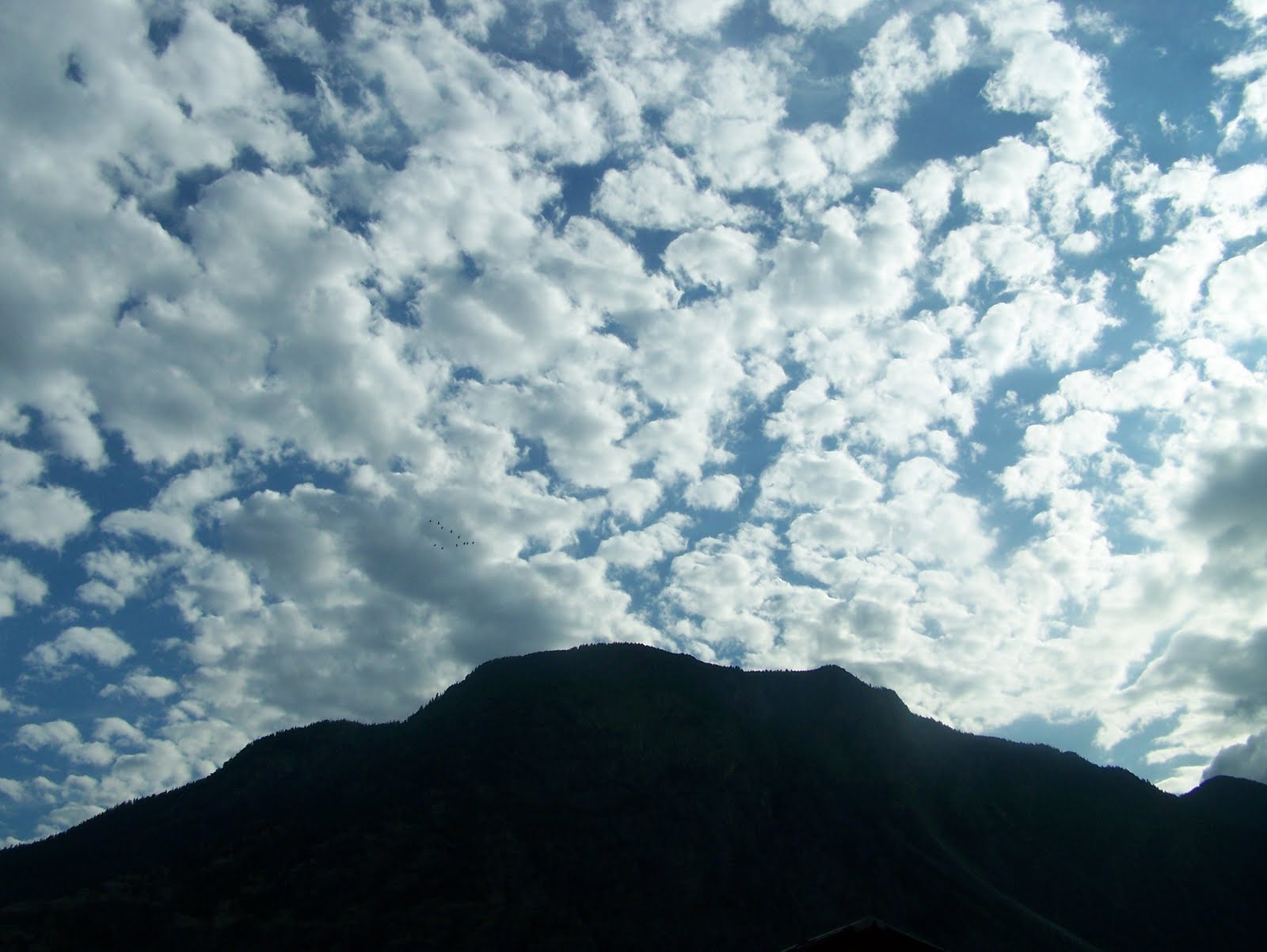
Casa: In less than a week in Oaxaca, I've traveled with 3 different combinations of friends, bought dinner in 3 different markets and stayed in 3 different homes. One with a hammock, one with a creepy labyrinth, and tonight's lodging has a beautiful garden smack in the middle of it, causing no interruption. Climbed some pyramids a couple days ago but mostly I have recollections of sweet breezes and tall grass, no pictures. The walls are covered with art and political spray paint, mostly about the APPO.
06 November 2007
02 November 2007
Sur, Sure
Giros: South again. Out the bus window the agave plants are like dandelions covering the emerging green hills, which also carry shadows of the clouds overhead. The land is yellow and green and brown, looking very dry. We are leaving a small farm in Puebla, where I passed a day mopping, washing dishes, weeding a radish patch, and preparing several baskets of lettuce seed. The farm is in the valley of Puebla, a volcano in each corner, all of which, if not active, are awake. Popocatepetl, a rumbling and powerful giant, Iztaccíhuatl, his sleeping partner, el Malinche, and finally, el Pico de Orizaba, the largest volcano in all of Mexico, whose snowy peak appeared between wispy clouds. They say the land here has a powerful energy and I was only there for a day and a half but I did observe that I continuously dropped things and my mind was a little cloudy.
Our bus continues to round bends and ascend and descend. The ground is grey now, someone is on the side of the road looking out over a cavity in the earth. Cactus stand on the mountains like porcupine quills. Fallen rocks and unsteady mountains sides are out either window, the beauty and immenseness of the south is coming back to me.
A few nights ago we waited on the side of a highway for a woman named Kumara, one of the farm's owners. She picked us up and drove us in the dark to her little "paraiso," as she called it. We bumped along on a dirt road past truck after truck after truck piled high with flowers that are the essence of fuschia and gold. They are the flowers for the ofrendas, the altars to the dead, that are in every home and on the streets, in universities and restaurants, because in these days the dead will be coming back to celebrate with the living. Celebrations are taking place all over the country and these flowers are being rapidly cut, piled in the backs of pick up trucks and transported all over the Republica. Not only for ofrendas, people also scatter them in crosses and other designs with a path that leads the dead right to their front door. The sight is beautiful and the air sweetly fragrant.
The next night we bumped along again in the dark, this time 11 of us were piled into a small, wooden wagon pulled by a small but hardworking horse. We arrive to a pueblo nearby, several boys in the town are blocking off different streets with string, stopping cars to ask for pesos, not candy.
When the sun sets, the clouds look like they are made out of smoke, the pink haze cast by the sun is made purplish by the remaining clear blue of the sky, shadows multiply and distort the landscape and when the sun finally drops past the horizon, I miss it.
Sabor: Now we are in Oaxaca, surrounded by mountains and full of colorful and vibrating energy. This morning I laid in a hammock at our host's house and the smells of chocolate, garlic and chiles, repeatedly washed over me, covered me, so strongly that I felt as if I were in a kitchen watching an experienced woman make mole. Occasionally a cool breezes carried the smells away but each time they returned stronger than before. Later, our host's roommate tells us that their neighbor's mother promised them mole this afternoon. Even the air in Oaxaca can be tasted.
Our bus continues to round bends and ascend and descend. The ground is grey now, someone is on the side of the road looking out over a cavity in the earth. Cactus stand on the mountains like porcupine quills. Fallen rocks and unsteady mountains sides are out either window, the beauty and immenseness of the south is coming back to me.
A few nights ago we waited on the side of a highway for a woman named Kumara, one of the farm's owners. She picked us up and drove us in the dark to her little "paraiso," as she called it. We bumped along on a dirt road past truck after truck after truck piled high with flowers that are the essence of fuschia and gold. They are the flowers for the ofrendas, the altars to the dead, that are in every home and on the streets, in universities and restaurants, because in these days the dead will be coming back to celebrate with the living. Celebrations are taking place all over the country and these flowers are being rapidly cut, piled in the backs of pick up trucks and transported all over the Republica. Not only for ofrendas, people also scatter them in crosses and other designs with a path that leads the dead right to their front door. The sight is beautiful and the air sweetly fragrant.
The next night we bumped along again in the dark, this time 11 of us were piled into a small, wooden wagon pulled by a small but hardworking horse. We arrive to a pueblo nearby, several boys in the town are blocking off different streets with string, stopping cars to ask for pesos, not candy.
When the sun sets, the clouds look like they are made out of smoke, the pink haze cast by the sun is made purplish by the remaining clear blue of the sky, shadows multiply and distort the landscape and when the sun finally drops past the horizon, I miss it.
Sabor: Now we are in Oaxaca, surrounded by mountains and full of colorful and vibrating energy. This morning I laid in a hammock at our host's house and the smells of chocolate, garlic and chiles, repeatedly washed over me, covered me, so strongly that I felt as if I were in a kitchen watching an experienced woman make mole. Occasionally a cool breezes carried the smells away but each time they returned stronger than before. Later, our host's roommate tells us that their neighbor's mother promised them mole this afternoon. Even the air in Oaxaca can be tasted.

29 October 2007
Hielo
Blanco: This cold is bitter, not biting, but uncomfortable and distracting. Today the sun wasn't able to penetrate the thick, white cover of clouds and we shivered, bought warm food and coffee, hid in back corners of book stores, trying to find, conserve, sense some sort of heat. In a country where no one has heaters in their homes or businesses, I almost thought we had no where to go. But, when we arrived to our host, Erick,'s house, with dinner and some card playing, my blood started to circulate again.
Cement blocks: We gave another Beehive presentation on Saturday in Mexico City at the Centro Social Libertario de Ricardo Flores Magon, an activist space a little west of DF's center. We were nervous and all the more so when they started pulling out slide projectors and microphones, but my hastily written index cards helped a lot. Most of our nerves dissipated when we were able to make the small crowd (20 or so?) laugh and I didn't find myself thinking too hard about my Spanish. At the end, people made comments and asked us questions for another half hour. It was another bit of refreshment seeing people throw around ideas, personal stories, half thoughts and profound concepts that the graphics provoked in them. And as we cleaned up, we were bombarded by folks wanting the web page, an email, to give us emails and contacts for groups who might want posters, etc. We left after many hugs and high fives.
Hechos: Thinking we would be 6, we moved to a different host's home on a different end of the city. Erick works for the government, something with the economy, but so far whenever I've seen him he's been listening to loud Polish and Czech music, or watching music videos of the same. His humor is odd but Amolia and I keep being pleasantly surprised at the number of folks we've been meeting who share an affinity for Poland. Our former host taught us a few words and yesterday Erick taught us a few more. Sajam, Dobra, Gupy, those are a few.
Cement blocks: We gave another Beehive presentation on Saturday in Mexico City at the Centro Social Libertario de Ricardo Flores Magon, an activist space a little west of DF's center. We were nervous and all the more so when they started pulling out slide projectors and microphones, but my hastily written index cards helped a lot. Most of our nerves dissipated when we were able to make the small crowd (20 or so?) laugh and I didn't find myself thinking too hard about my Spanish. At the end, people made comments and asked us questions for another half hour. It was another bit of refreshment seeing people throw around ideas, personal stories, half thoughts and profound concepts that the graphics provoked in them. And as we cleaned up, we were bombarded by folks wanting the web page, an email, to give us emails and contacts for groups who might want posters, etc. We left after many hugs and high fives.
Hechos: Thinking we would be 6, we moved to a different host's home on a different end of the city. Erick works for the government, something with the economy, but so far whenever I've seen him he's been listening to loud Polish and Czech music, or watching music videos of the same. His humor is odd but Amolia and I keep being pleasantly surprised at the number of folks we've been meeting who share an affinity for Poland. Our former host taught us a few words and yesterday Erick taught us a few more. Sajam, Dobra, Gupy, those are a few.
27 October 2007
Movimiento
Leaving, but when good byes aren't necessary: I spent a few more days in Querétaro after returning from Yucatan. I relaxed and prepared for our swoop south. We had a small discussion about the Plan Colombia poster at a cafe called La Biznaga, which overall went well despite a lack of preparation and the poca gente. Pero bueno, asi es. Regardless, we got cafe de olla, gratis, and a few new contacts to add to the list. Renato and I celebrated my last night in QRO with a caguama of Leon, some cookies, and the Cure- just what I needed, or what we both needed, I suppose. Leaving Qro, like Guanajuato, was slow moving but without consequence, and we arrived to the monstruo of DF, Mexico City, Wednesday night. Higher altitude, constant motion, tanta gente. Jumping on the Metro, I remember New York and can't help but compare.
Current: We stayed our first night with a friend of a friend, Tomás, and his giant cat, Pachi. I finally was able to make a call to the US and it was worth every peso. Voices are distant and sound different but in the end, we find familiarity.
We moved the next day to a couchsurfer's home, near Coyocan. Rodrigo treats us very well and even lets us have his bed, a soft, warm, can't get out of it in the morning bed. Nice. We spent the day at the university, la Universidad Nacional Autonoma de Mexico (UNAM). DF and the UNAM are like a breath of fresh air after coming from the cerrada-ness of Querétaro and Guanajuato. Spaces for dialogue and critical analysis and action exist and I watched intently the swirl of people and objects at this historical leftist institution. Young intellectuals meander among blankets covered with pirated dvds and cds for sale, grey haired professors order Puma burgers con papas in the cafe, a sort of bake sale run by the EZLN is just inside the Facultad de Filosofia, and movies, theatre performances, concerts, platicas, seminars, trips, are advertised on flyers that are plastered on all bulletin boards and walls. We roll out the Beehive posters and people are interested, they stop and chat with us for a while, they pass us emails, and invitations to clases and plantones, anarquista newspapers, and the names of artists or organizations or people we should know of or meet. They talk to us more as activists, than as extranjeras or turistas, which feels good. I want to jump into the corriente, to study and be active in a place where things are moving, changing, erupting por todos lados.
Current: We stayed our first night with a friend of a friend, Tomás, and his giant cat, Pachi. I finally was able to make a call to the US and it was worth every peso. Voices are distant and sound different but in the end, we find familiarity.
We moved the next day to a couchsurfer's home, near Coyocan. Rodrigo treats us very well and even lets us have his bed, a soft, warm, can't get out of it in the morning bed. Nice. We spent the day at the university, la Universidad Nacional Autonoma de Mexico (UNAM). DF and the UNAM are like a breath of fresh air after coming from the cerrada-ness of Querétaro and Guanajuato. Spaces for dialogue and critical analysis and action exist and I watched intently the swirl of people and objects at this historical leftist institution. Young intellectuals meander among blankets covered with pirated dvds and cds for sale, grey haired professors order Puma burgers con papas in the cafe, a sort of bake sale run by the EZLN is just inside the Facultad de Filosofia, and movies, theatre performances, concerts, platicas, seminars, trips, are advertised on flyers that are plastered on all bulletin boards and walls. We roll out the Beehive posters and people are interested, they stop and chat with us for a while, they pass us emails, and invitations to clases and plantones, anarquista newspapers, and the names of artists or organizations or people we should know of or meet. They talk to us more as activists, than as extranjeras or turistas, which feels good. I want to jump into the corriente, to study and be active in a place where things are moving, changing, erupting por todos lados.
23 October 2007
Pantanos, aprendizaje y profundidad: Hogares y homes
Michigan: Today is it very frigid in Queretaro. Yesterday the heat exhausted me and today the cold is making my fingers very resistent to typing this right now. Reminds me of Michigan. Just like the clay pumpkins being sold on the sidewalk or realizing that the trees will only fade slightly as the dry season sets in but will never blaze aflame as in Michigan this time of year. Sometimes I think I would like to go home sooner than later but then I remember that bitter snow and think otherwise. Luckily, I think I may have found a job that I would love to have in the south of Ecuador. Still, Michigan remains my home.
Guanajuato: To really live in a place, you have to experience it at its greatest depths and in turn, experience your very self at your own depths. It involves love and suffering and all of the sentiment and pensamientos in between. You slide from one extreme to the other, until you realize that there is really not too much difference between the two or even between the middle-area shades. A few years ago I stayed in Guanajuato for a month, but it wasn’t until recently that I really felt that I had lived there. Nestled in that pueblo, which is nestled among hills and colored cement, is a community, a family, which I had the great pleasure of joining, albeit only for a week. Once I had a great learning experience related to the concept of perspective that is especially apt for cases such as Guanajuato and the community that I am writing of. For instance, to middle aged extranjeros who are studying at Escuela Mexicana and staying in Casa Mexicana, who pass Bar Fly daily in their comings and goings from school and cafes and home, probably perceive it as nothing more than a bohemian bar, which, in all honesty, it is. Still, perhaps what they note most is the reggae music, the scruffy youth drinking on the balconies at noon, the artists and musicians who roam to and fro. Fresas don’t even consider the place, I imagine. When I first came to Guanajuato almost 3 years ago, I thought: Wow, this bar plays Sublime?! It’s a great find for young kids, for sure, but I was also slightly repelled by the debauchery that took place there and sometimes felt a bit out of place.
But now, I have a unique insight into this bar, which is granted to the aforementioned family and their friends. This is due to the fact that the bar keep graciously offered us hospedaje for a week after we showed up with all of our belongings one night with no place else to go. A couple of the nights we slept in the room of one of the bartenders, but the others, right there mero in the bar. As our luck would have it, during the Cervantino festival the bar didn’t close until 4 am. This really meant 5 am (after convincing people that the music had, indeed, stopped). This really meant 6 am (after counting the money, putting down the beds, kicking the very last kids out). We made friends with a few of the bartenders, the others dealt with us politely or curiously but in the end we got to know them all. The dynamics of the group are interesting. Most of the workers are from Guanajuato and most of the regulars are foreigners. Transience permeates the atmosphere and makes every encounter all the more intense.
Some days we only wandered between the bar and the café, less than a block away, where regulars and bar and café employees mix and eat and smoke for hours. Other days we walked a few more blocks, but never leaving the sphere of the Bar Fly-Santo-Casa Tomada community. I thank all the folks there with all of my heart, especially Yaros for that pinche smile, Uriel for his awkwardness and understanding, Leo for his pats on the back, Galo simply for his presence (Te lo dije!!), and the rest for their smiles, energy, and welcoming spirits. What depths we all fell to and rose from and flung ourselves back to, what a home.
In Guanajuato we also saw a beautiful theatre performance at a collective artist’s space, called La Casa Tomada. Dancing and theatrics and video screens flowed together like icebergs, jagged yet fluid.
Leaving Guanajuato, we took what must have been the slowest city bus in history. It moved even slower than history and the entire city of Guanajuato scraped and dragged over us. It felt like hours, a lifetime, an eternity and I must have thought a million times about jumping off the bus but realized that then I would just be suspended in that eternal gravitating force that surrounds Guanajuato. A sad voice and guitar are on the bus, they are singing, “hay que saber perder.” I put on my sunglasses and bite my lip.
Querétaro: After the intensity of Guanajuato, Queretaro was like returning to the womb. Renato met us at the Central, carried our things, asked us how we were. Such simple encounters can mean so much. He took us home, his mother, as always, fed us and took care of Abigail when she got sick. Queretaro is a home where I may not fall into black holes, but where my laundry is washed and folded and where we drink chocolate milk in the morning with our fruit and honey and where we watch television and listen to music on lazy Sunday mornings. Sometimes you can’t go home, and sometimes you can.
Mérida: I am always grateful for experiences that I could not have otherwise had without knowing certain folks or by being in the right space at the right time. Renato submitted a short story to a literature conference for university students taking place in Merida, Yucatan and was accepted. He invited me to come along and, Merida being one of my favorite cities, of course I jumped at the chance. Though I almost got kicked off the bus in the beginning (they thought there wasn’t enough space), everything turned out fine.
We traveled hugging the Gulf of Mexico, only stopping for gas and bathroom breaks and once to eat lunch. At some point I woke up while we were somwhere in the middle of Mexico, a place without names or purpose to me. I had been dreaming and I woke to an eerie and dreamlike landscape, an ocean of fog. The land rushed by in silence, past palapas that sell fried chicken and fish, palapas that sell coca cola and cigarettes, palapas that sell internet and copies, palapas where clothes hang to dry and babies sleep and machetes are sharpened before dawn. I think we were in Tabasco, a long, sticky, salty state, where marshes met us on either side of the road, only interupted by graceful snow-white birds with long necks and aluminum-sided shacks. Sometimes the land disappeared entirely beneath the fog. 24 hours in the bus from Queretaro to Merida. People kept repeating that- 24 horas- and it didn’t really hit me until I was violently ill for 12 hours on the way there. But, as soon as we hit Merida, la verdadera cura, I felt completely fine. Que raro.
In Merida, we went to as little of the conference as necessary to free up plenty of time for the beach and cenotes and wandering around the city. Most folks from Central Mexico rarely get the chance to travel so far south and took advantage of the opportunity (and also to make plenty of jokes about Yucatecans, mostly regarding the size of their heads). Puerto Progreso isn’t the most tranquil or clean beach (it is a shipping port, after all), but wading out into the Gulf, a crystalline green with a clear blue sky over head, salt water and warm breezes, felt perfect. We were able to get to the beach twice. Another day, as soon as Renato finished reading his story, we took off for a nearby cenote. Cenotes are little fresh water holes that are all over, above and under ground, in Yucatan. We went to one that was in an arqueological zone, where they let me enter for free even after they noticed that my Mexico student id was no longer vigente. There was no way of knowing how deep the cenote was but some stones around the edge allowed us to rest a little in the water. The water was deep green, without depth, covered half way by lily pads, and the water was fresh and cool.
During the night, after the intense heat of day had let up some, we walked around the city. One night we watched Yucatecan dance and trova in the Parque Santa Lucia, a beautiful display of tradition and Yucatecan culture. I didn’t get my hamaca, but I’m sure I’ll be back. Ah, Merida, I would love to make you my home.
Guanajuato: To really live in a place, you have to experience it at its greatest depths and in turn, experience your very self at your own depths. It involves love and suffering and all of the sentiment and pensamientos in between. You slide from one extreme to the other, until you realize that there is really not too much difference between the two or even between the middle-area shades. A few years ago I stayed in Guanajuato for a month, but it wasn’t until recently that I really felt that I had lived there. Nestled in that pueblo, which is nestled among hills and colored cement, is a community, a family, which I had the great pleasure of joining, albeit only for a week. Once I had a great learning experience related to the concept of perspective that is especially apt for cases such as Guanajuato and the community that I am writing of. For instance, to middle aged extranjeros who are studying at Escuela Mexicana and staying in Casa Mexicana, who pass Bar Fly daily in their comings and goings from school and cafes and home, probably perceive it as nothing more than a bohemian bar, which, in all honesty, it is. Still, perhaps what they note most is the reggae music, the scruffy youth drinking on the balconies at noon, the artists and musicians who roam to and fro. Fresas don’t even consider the place, I imagine. When I first came to Guanajuato almost 3 years ago, I thought: Wow, this bar plays Sublime?! It’s a great find for young kids, for sure, but I was also slightly repelled by the debauchery that took place there and sometimes felt a bit out of place.
But now, I have a unique insight into this bar, which is granted to the aforementioned family and their friends. This is due to the fact that the bar keep graciously offered us hospedaje for a week after we showed up with all of our belongings one night with no place else to go. A couple of the nights we slept in the room of one of the bartenders, but the others, right there mero in the bar. As our luck would have it, during the Cervantino festival the bar didn’t close until 4 am. This really meant 5 am (after convincing people that the music had, indeed, stopped). This really meant 6 am (after counting the money, putting down the beds, kicking the very last kids out). We made friends with a few of the bartenders, the others dealt with us politely or curiously but in the end we got to know them all. The dynamics of the group are interesting. Most of the workers are from Guanajuato and most of the regulars are foreigners. Transience permeates the atmosphere and makes every encounter all the more intense.
Some days we only wandered between the bar and the café, less than a block away, where regulars and bar and café employees mix and eat and smoke for hours. Other days we walked a few more blocks, but never leaving the sphere of the Bar Fly-Santo-Casa Tomada community. I thank all the folks there with all of my heart, especially Yaros for that pinche smile, Uriel for his awkwardness and understanding, Leo for his pats on the back, Galo simply for his presence (Te lo dije!!), and the rest for their smiles, energy, and welcoming spirits. What depths we all fell to and rose from and flung ourselves back to, what a home.
In Guanajuato we also saw a beautiful theatre performance at a collective artist’s space, called La Casa Tomada. Dancing and theatrics and video screens flowed together like icebergs, jagged yet fluid.
Leaving Guanajuato, we took what must have been the slowest city bus in history. It moved even slower than history and the entire city of Guanajuato scraped and dragged over us. It felt like hours, a lifetime, an eternity and I must have thought a million times about jumping off the bus but realized that then I would just be suspended in that eternal gravitating force that surrounds Guanajuato. A sad voice and guitar are on the bus, they are singing, “hay que saber perder.” I put on my sunglasses and bite my lip.
Querétaro: After the intensity of Guanajuato, Queretaro was like returning to the womb. Renato met us at the Central, carried our things, asked us how we were. Such simple encounters can mean so much. He took us home, his mother, as always, fed us and took care of Abigail when she got sick. Queretaro is a home where I may not fall into black holes, but where my laundry is washed and folded and where we drink chocolate milk in the morning with our fruit and honey and where we watch television and listen to music on lazy Sunday mornings. Sometimes you can’t go home, and sometimes you can.
Mérida: I am always grateful for experiences that I could not have otherwise had without knowing certain folks or by being in the right space at the right time. Renato submitted a short story to a literature conference for university students taking place in Merida, Yucatan and was accepted. He invited me to come along and, Merida being one of my favorite cities, of course I jumped at the chance. Though I almost got kicked off the bus in the beginning (they thought there wasn’t enough space), everything turned out fine.
We traveled hugging the Gulf of Mexico, only stopping for gas and bathroom breaks and once to eat lunch. At some point I woke up while we were somwhere in the middle of Mexico, a place without names or purpose to me. I had been dreaming and I woke to an eerie and dreamlike landscape, an ocean of fog. The land rushed by in silence, past palapas that sell fried chicken and fish, palapas that sell coca cola and cigarettes, palapas that sell internet and copies, palapas where clothes hang to dry and babies sleep and machetes are sharpened before dawn. I think we were in Tabasco, a long, sticky, salty state, where marshes met us on either side of the road, only interupted by graceful snow-white birds with long necks and aluminum-sided shacks. Sometimes the land disappeared entirely beneath the fog. 24 hours in the bus from Queretaro to Merida. People kept repeating that- 24 horas- and it didn’t really hit me until I was violently ill for 12 hours on the way there. But, as soon as we hit Merida, la verdadera cura, I felt completely fine. Que raro.
In Merida, we went to as little of the conference as necessary to free up plenty of time for the beach and cenotes and wandering around the city. Most folks from Central Mexico rarely get the chance to travel so far south and took advantage of the opportunity (and also to make plenty of jokes about Yucatecans, mostly regarding the size of their heads). Puerto Progreso isn’t the most tranquil or clean beach (it is a shipping port, after all), but wading out into the Gulf, a crystalline green with a clear blue sky over head, salt water and warm breezes, felt perfect. We were able to get to the beach twice. Another day, as soon as Renato finished reading his story, we took off for a nearby cenote. Cenotes are little fresh water holes that are all over, above and under ground, in Yucatan. We went to one that was in an arqueological zone, where they let me enter for free even after they noticed that my Mexico student id was no longer vigente. There was no way of knowing how deep the cenote was but some stones around the edge allowed us to rest a little in the water. The water was deep green, without depth, covered half way by lily pads, and the water was fresh and cool.
During the night, after the intense heat of day had let up some, we walked around the city. One night we watched Yucatecan dance and trova in the Parque Santa Lucia, a beautiful display of tradition and Yucatecan culture. I didn’t get my hamaca, but I’m sure I’ll be back. Ah, Merida, I would love to make you my home.
15 October 2007
Abejas en Guanajuato
Date: Sábado, el 6 de Octubre, a las 11:00 de la mañana
Location: el Restaurant Hotel de los Ángeles
Calle Cantarranas 22, junto al Teatro Principal
Guanajuato, GTO
Graphic: Plan Colombia
Presentation: Pre-planned and promoted with posters and word of mouth
Length: 1.5 hours
Attendance: 11 (us + 7) mexicanos, frances, estadounidences
Discussion – role that religion plays in conflict and resolution. maintaining the conflict: neither side wants the conflict to end because the governemnt, paramilitaries, and guerrila groups alike benefit from both the conflict and the cocaine production, both of these bringing in foreign currency.
---Gracias a abeja citlalpilli----
Our first Bees event in Guanajuato went well overall, considering our energy level and the time of day (Saturday morning in a party town?). The discussion ranged from minute detail to concepts that almost hurt the brain to consider. People have many ideas and unique ways of expressing themselves and in this way we are learning from each other. People love the art of the bees and everytime they ask if we are the artists, I really wish that we were. Although at the same time, it is nice to be able to share the work with others and in a way, we are all the artists. The hostal where we presented treated us well, filling us up with coffee and bread and jam before our presentation. The chef, ever with a cigarillo in her mouth, continually patted us on the backs and asked if there was anything else we needed. All in all, it left me energized and happy about this project. Our next cita is in Queretaro in a week.
10 October 2007
La muerte
Voz: Through luck and friends, I was able to attend a Cervantino event. Every night at 8pm, outside of El Alhondiga (throughout history a grainery, a fort, a jail, and now a museum), the entertainment alternates between music, theatre and dance. In the bleachers, the entrance is free but fills up, depending on the event, between an hour or several hours before 8. On the ground, people with tickets or press passes can sit or stand, como gusten. And well, it helps to be friends with the employees of a bar for many reasons, I suppose, and in this case it was that we got free tickets to see Oscar Chavez, a great Mexican folk singer who sings of love and (mostly) leftist politics. A huapango band opened the show, singing powerful stories about the sierra and, of course, also about love. The guitarist and bassist were mellow and the singer, a grand story teller. The violinists were frantic, moving the feet of a woman who stamped and kicked to the music causing the pink and green and yellow of her skirt to swirl madly around her. The songs that talked about the uselessness of the government recieved wild applause and shouting, and one song was especially moving because it talked about the repressiveness of the Mexican government, referring both the the student massacre in Mexico City and the harsh repression that occurred in Oaxaca last summer. The song was sad and my friends shouted, "Oaxaca no se olvide!!" Oaxaca will not be forgotten. No one was bothered by the rain at all, especially when Oscar Chavez came on stage.
Oscar Chavez sat very distinguished, his deep voice flowed without effort, and he gave each song a uniqueness that could only come from a voice like his. Songs ranged from slow and somber, like La llorona (the weeping woman), to a homeage to Comandante Che Guevara (the anniversary of his death being so close), to Macondo, a quick and lively song that we tried to dance to despite the small piece of cement we were standing on. Oscar Chavez also sang about politics and government, something he's known for, especially his leftist leanings and condeming indictments of government and politicians. Later, the opening band joined Oscar Chavez for more huapango. The best part was the last song, when Oscar Chavez and the other band sang verses back and forth to each other about each other's musical abilities, in a friendly competition that ended in Oscar Chavez comparing the other band to the momias of Guanajuato.
But the end of the show was probably my favorite. The woman who had danced and sang in the beginning returned, this time with the mask of death on her face, a bright pink scarf tied around her head, a large sickle and a basket. She passed papers back and forth between Oscar Chavez and the singer of the other band, which told of the deaths of (mostly) the various politicians and political institutions of Mexico. The current president, Felipe Calderon, clearly was targeted and the crowd roared. Vicente Fox and Martita (as Mexicans call his spouse) received harsh treatment even from death herself. Corporate media, the governor of Guanajuato and even Oscar Chavez all recieved their summons. The mix of politics, hilarity and death is something that I doubt would take place in the United States. But here, death is laughing and mocking us and we are laughing and dancing with her. Octavio Paz talks about this as Mexico's way of avoiding serious contemplation of death, that by eating sugar coated skeletons and skulls and dancing on graves, they close themselves off to death and therefore to life. This is similar to the way in which in the United States, he says, people often behave as if death doesn't exist. Mexicans bring death, in all her colorful glory, into their lives, but never close enough to see it as more than a dance partner, a lover, or a friend. By mocking death, Mexicans are really mocking their own lives, Paz claims, and this leads to a pessimistic view of life that permeates throughout Mexican life. It's hard to say at what depths Paz is right or not, but his view is interesting, as is the different ways in which people celebrate, abhor, or ignore death.
Oscar Chavez sat very distinguished, his deep voice flowed without effort, and he gave each song a uniqueness that could only come from a voice like his. Songs ranged from slow and somber, like La llorona (the weeping woman), to a homeage to Comandante Che Guevara (the anniversary of his death being so close), to Macondo, a quick and lively song that we tried to dance to despite the small piece of cement we were standing on. Oscar Chavez also sang about politics and government, something he's known for, especially his leftist leanings and condeming indictments of government and politicians. Later, the opening band joined Oscar Chavez for more huapango. The best part was the last song, when Oscar Chavez and the other band sang verses back and forth to each other about each other's musical abilities, in a friendly competition that ended in Oscar Chavez comparing the other band to the momias of Guanajuato.
But the end of the show was probably my favorite. The woman who had danced and sang in the beginning returned, this time with the mask of death on her face, a bright pink scarf tied around her head, a large sickle and a basket. She passed papers back and forth between Oscar Chavez and the singer of the other band, which told of the deaths of (mostly) the various politicians and political institutions of Mexico. The current president, Felipe Calderon, clearly was targeted and the crowd roared. Vicente Fox and Martita (as Mexicans call his spouse) received harsh treatment even from death herself. Corporate media, the governor of Guanajuato and even Oscar Chavez all recieved their summons. The mix of politics, hilarity and death is something that I doubt would take place in the United States. But here, death is laughing and mocking us and we are laughing and dancing with her. Octavio Paz talks about this as Mexico's way of avoiding serious contemplation of death, that by eating sugar coated skeletons and skulls and dancing on graves, they close themselves off to death and therefore to life. This is similar to the way in which in the United States, he says, people often behave as if death doesn't exist. Mexicans bring death, in all her colorful glory, into their lives, but never close enough to see it as more than a dance partner, a lover, or a friend. By mocking death, Mexicans are really mocking their own lives, Paz claims, and this leads to a pessimistic view of life that permeates throughout Mexican life. It's hard to say at what depths Paz is right or not, but his view is interesting, as is the different ways in which people celebrate, abhor, or ignore death.
05 October 2007
Gotas de alegria
Juerga: Paz is now saying that the Mexicans' fascination and dedication to parties and celebration of every occasion also finds its origin in their closed nature. That, in parties, Mexicans allow themselves to open up in deliriously loud and colorful ways, pushing their stomachs, their voices, their emotions to their absolute limits and then some. The result is nothing like the "weekend" or the "cocktail parties" that we have in the states, but rather a grand manifestation of food, music, color, alcohol, screaming, dancing, crying, fighting, death and rebirth. He says, sure, accidents and harm do happen, tearful confessions interrupt friendly conversation, friends become brothers and enemies in a matter of hours, but that this is the way of the Mexican party. Such a release of the energy and emotion which is otherwise bottled up most of the time shoots into the sky like cohetes, fireworks, and explodes downward in a fury of color and sound.
Lluvia: I also was thinking about another of Paz's ideas from earlier in the book, relating to how Mexicans accept their surroundings with little motivation to change them or make their own place within them. He says this is why other countries create and Mexico does not. Natural phenomena shapes the life of Mexicans, while in the U.S. people shape the world around them in their image, to make it their own vision of what life is. This subtle, yet fundamental, difference between Mexico and other countries, to Paz, forms the base of Mexico's social and political institutions, the economy, and so many other facets of Mexican society.
Abby and I were discussing this between bouts of spanish study and remembered how we both noticed that when the sky turned dark and opened up to release large, fast-falling drops, the only folks still attempting to go about their business were tourists. Mexicans, rather, will simply duck under an awning or into a building and wait out the rain. Tourists have their raincoat on and umbrella out without missing a step. It seemed, to me, to affirm Paz's statements, though surely in only a superficial way.
Lluvia: I also was thinking about another of Paz's ideas from earlier in the book, relating to how Mexicans accept their surroundings with little motivation to change them or make their own place within them. He says this is why other countries create and Mexico does not. Natural phenomena shapes the life of Mexicans, while in the U.S. people shape the world around them in their image, to make it their own vision of what life is. This subtle, yet fundamental, difference between Mexico and other countries, to Paz, forms the base of Mexico's social and political institutions, the economy, and so many other facets of Mexican society.
Abby and I were discussing this between bouts of spanish study and remembered how we both noticed that when the sky turned dark and opened up to release large, fast-falling drops, the only folks still attempting to go about their business were tourists. Mexicans, rather, will simply duck under an awning or into a building and wait out the rain. Tourists have their raincoat on and umbrella out without missing a step. It seemed, to me, to affirm Paz's statements, though surely in only a superficial way.
Subscribe to:
Posts (Atom)